

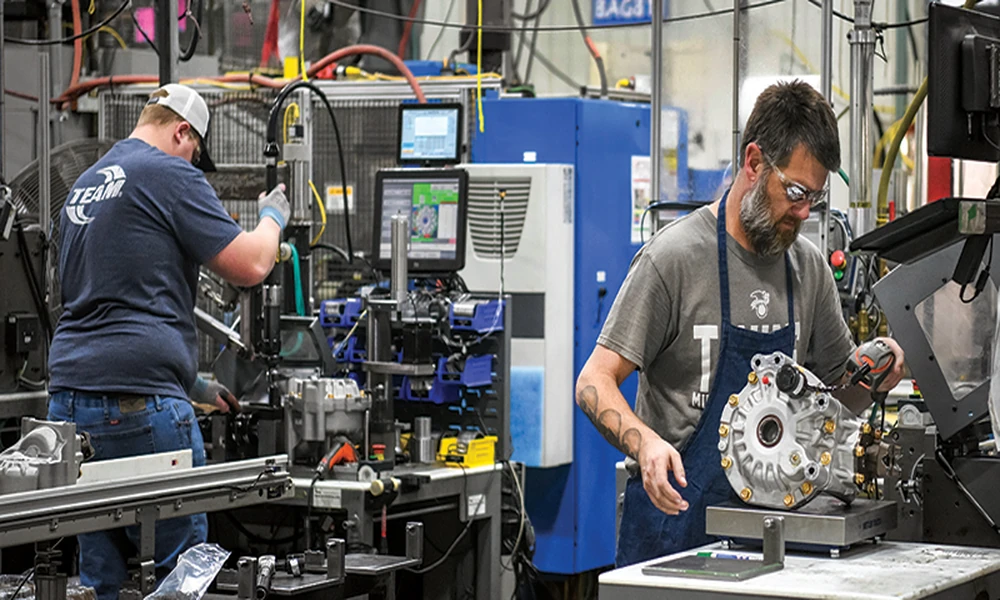
Minnesota’s factories, food plants, and medical device facilities all depend on careful planning long before the first shovel hits the ground. A business that shares its production process with a contractor early gives that contractor the chance to design a building around real operations instead of guesswork.
Without clear details on equipment, workflow, and output goals, contractors may design spaces that need costly changes later. This information also helps contractors plan utilities, ventilation, and floor loads that match the actual machinery a business will use. This article looks at why that early conversation matters and how it shapes stronger Industrial Construction in Minnesota.
Understanding Minnesota’s Industrial Construction Landscape
Minnesota is home to a wide mix of industries, from Iron Range mining operations to food processing plants near Rochester and medical device manufacturers around the Twin Cities. Each of these industries has its own production needs, and a contractor building a plant for a cheese producer will face different demands than one building a facility for a medical device company.
Local weather also plays a role, since frost depth and heavy snow loads require specific foundation and roof designs. State agencies such as the Minnesota Department of Labor and Industry set building codes that contractors must follow closely. Because so many factors are already in play, a contractor benefits greatly when a business explains its production process from the start.
Why Production Details Shape Design Choices
Every production line has its own footprint, and the machines, conveyor belts, and storage areas a business uses determine how much floor space and ceiling height a building needs. If a contractor does not know the weight or vibration level of heavy equipment, the foundation may not hold up over time.
Ventilation and drainage systems also depend heavily on what a business produces, since food processing plants and chemical facilities have very different needs. Electrical load requirements change based on the type and number of machines running at once. When a business explains these details early, the contractor can design a facility that fits the operation instead of forcing the operation to fit the building.
Local Codes and Site Rules Contractors Must Follow
Minnesota has its own set of building codes, environmental rules, and permitting steps that industrial projects must clear before construction begins. The Minnesota Pollution Control Agency reviews projects that involve emissions, wastewater, or hazardous materials, and a contractor needs full details on production output to file the right permits.
Cities such as Minneapolis, St. Paul, and Duluth each have local zoning rules that affect where certain types of manufacturing can operate. Soil conditions across the state also vary, so a contractor must plan foundations differently for a site near the Mississippi River compared to one in the northern forests.
Cost and Schedule Benefits of Clear Communication
Businesses that share production details early can save significant money and time during construction. Poor communication is a known problem across the construction industry, and research from PlanGrid and FMI found that miscommunication costs the US construction sector close to $177 billion each year through rework and lost productivity. Minnesota businesses can avoid becoming part of that statistic by giving contractors a full picture of their needs from the start. A few specific benefits stand out when this happens:
- Fewer design changes once construction is underway
- Lower chances of delays tied to permit corrections
- Better accuracy in cost estimates and material orders
- Smoother coordination between contractors, engineers, and equipment vendors
Clear communication between a business and its contractor sets the tone for every stage of an Industrial Construction in Minnesota. Businesses that explain their production process in detail help contractors design safer, more efficient, and more cost-effective buildings. This approach also reduces the risk of delays tied to permits, code reviews, and site conditions specific to Minnesota.