

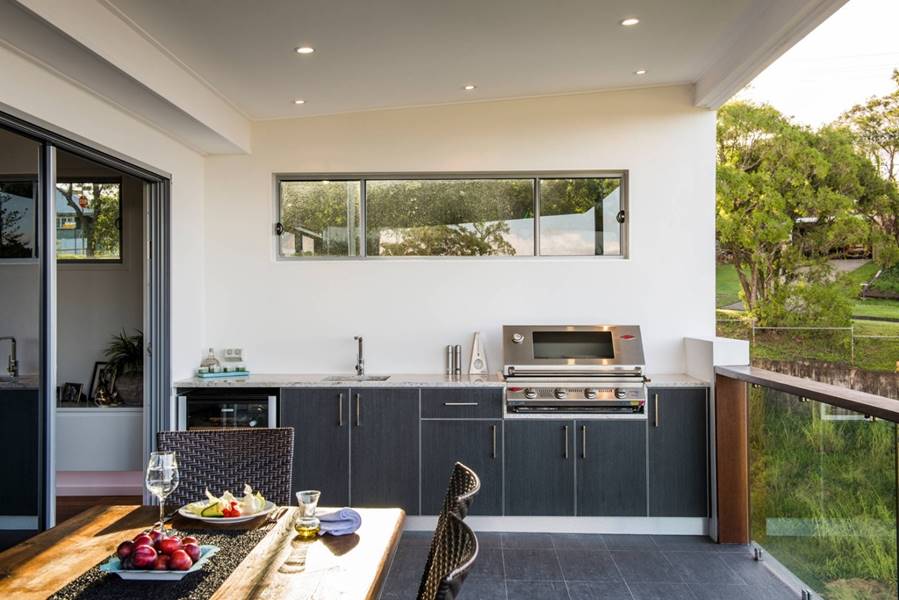
An outdoor barbecue kitchen rarely comes together by accident. The ones that feel easy to use, pleasant to stand in, and inviting for guests are usually the result of quiet planning. Not too complicated planning, though. Just thoughtful decisions made in the right order.
Looking at examples of outdoor modular kitchens helps you see this very clearly. These kitchens are not fixed designs dropped into a garden. They are built from units arranged around space, movement, and comfort. The layout adapts to you, rather than you adapting to the layout.
When you go through the outdoor kitchen designs displayed on the BBQs2u webpage, it demonstrates complete systems and not separated cabinets. It is easy to imagine how cooking, serving, and even socialising occur in a straight line as opposed to unequal and distinct corners.
Step 1: Choose the right spot first
Before thinking about counters or cabinets, decide where the kitchen is going to sit.
- Close enough to the house for convenience
- Sheltered from strong winds while cooking
- Near the area where people naturally gather
- With enough space to move freely around it
A good location saves effort every single time you cook.
Step 2: Break the kitchen into working zones
Most successful outdoor kitchens quietly follow a three-zone idea.
- Cooking zone with the grill and heat source
- Prep zone with clear counter space
- Serving or social zone where people can stand or sit
These zones should feel connected but not cramped.
Step 3: Plan storage earlier than you think
Storage often becomes an afterthought. That is when clutter appears.
- Drawers for tools, tongs, and utensils
- Cabinets for cookware and supplies
- Covered storage to protect items from dust and rain
When storage is planned well, the counters stay clear and usable.
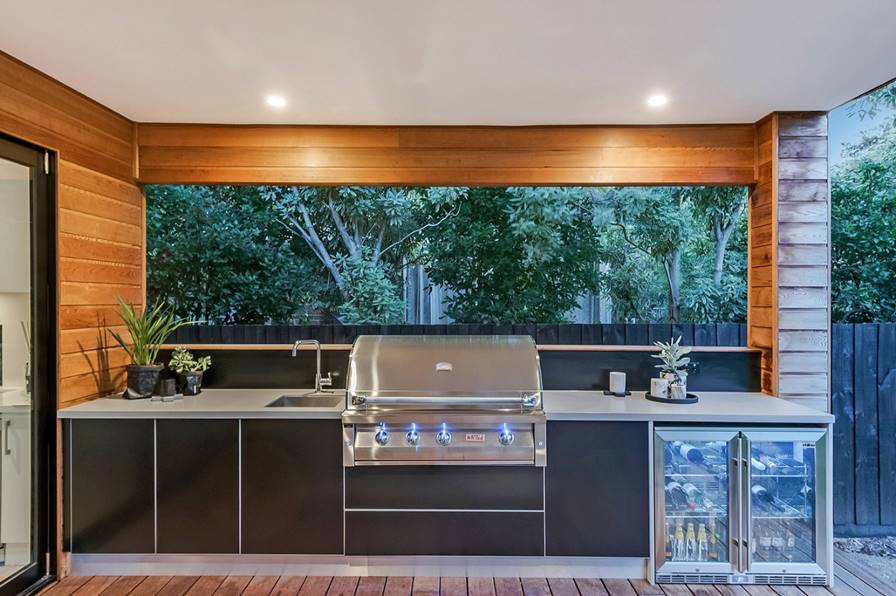
Step 4: Add shelter and seating for comfort
Alteration of the frequency of use of the space is brought about by a pergola, a partial roof, or a simple cover. Seat a few people there, and the kitchen becomes a social place instead of a kitchen nook.
- Shade for longer cooking sessions
- Bar-style counters with stools
- A place for guests to gather without being in the way
Step 5: Let the garden guide the design
The outdoor kitchen should feel like part of the garden, not an addition placed later.
- Match finishes with paving, decking, or stone
- Use colours that blend with greenery
- Keep the design in harmony with the surroundings
When this happens, the kitchen feels like it has always belonged there.
Step 6: Use corners wisely
Corners can easily become wasted space if ignored. A smart solution like the Whistler Cirencester 90 corner shows how an awkward angle can turn into practical storage while keeping the kitchen layout flowing naturally.
A well-planned outdoor barbecue kitchen does more than look impressive. It feels intuitive to use. Comfortable to stand in. Easy for guests to gather around. And once the layout works the way it should, you stop thinking about the planning that went into it. You just enjoy cooking outside.
