

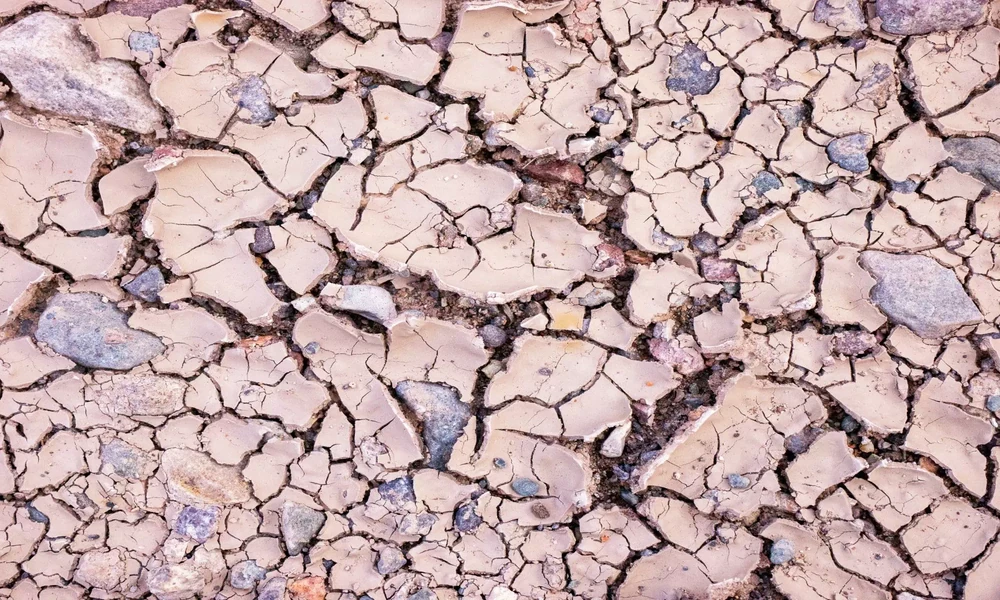
Anyone who has lived in the Houston region for a few years knows the weather has two moods. There are weeks when the sky seems permanently attached to the ground, and there are long, baked stretches when the lawn crunches underfoot. Most people treat this as a matter of comfort. For a house, it is a structural event.
Much of the ground under Harris County is clay, and clay has a habit that engineers have a plain word for: it is expansive. It swells when it soaks up water and shrinks when it dries out. A slab or pier foundation sitting on top of it gets pushed and pulled, season after season. Understanding what the clay does under specific conditions is the quickest way to understand why homes here crack, stick, and shift. This article is general information, not an engineering opinion on any particular house.
When It Rains for a Week
Wet clay expands, and it does so with real force. If the soil around and beneath a foundation swells evenly, the house rises a little as a whole and nothing much happens. The trouble comes from uneven swelling. A downspout that dumps water at one corner, a low spot where rain pools, or a flowerbed that traps moisture against the slab can make one section of ground swell more than the rest.
The foundation then bends slightly, because it is being lifted in one place and not another. That bending is how a hairline crack in drywall or a sticking door is born, often weeks after the rain that caused it.
When It Does Not Rain for Two Months
Dry weather reverses the process. Clay loses moisture, shrinks, and pulls away from the foundation edges, sometimes leaving visible gaps in the soil beside the slab. The outer edges of a house are the most exposed to the sun and wind, so they dry first and fastest, while the soil under the center of the slab holds its moisture longer.
This produces the opposite shape: the edges settle while the middle stays high. Houses can develop cracks that look quite different from the ones that form after heavy rain, which is part of why professionals look at the pattern of damage rather than a single crack.
When the Weather Swings Back and Forth
The extremes are not the whole story. The real stress comes from how quickly the ground goes from one to the other. A drought followed by a drenching storm forces the clay to swell fast, and fast change tends to be uneven change. The Gulf Coast climate delivers this whiplash often, which helps explain why foundation concerns are so common across the region.
When a Tree Gets Thirsty
Large trees are enormous pumps. A mature oak or a row of fast growing trees can pull a surprising amount of water out of the soil, especially in dry spells. If those roots sit near the house, they can dry the clay on one side much faster than on the other, shrinking it and letting that side of the foundation settle.
The tempting reaction is to cut the tree down, but that is not always the right move. Removing a large tree can let the soil rehydrate and swell, which brings its own movement. Anyone considering removal near a foundation should get advice first, rather than assuming either keeping or cutting is the safe choice.
When Water Escapes From a Pipe
Not all moisture comes from the sky. A leak in a supply or drain line beneath or beside a slab can soak one patch of clay all year long, regardless of the weather. Over time, that area can swell, or the soil can wash away and leave a void. The relationship runs both directions, too, since a shifting foundation can stress and crack pipes.
Clues include an unexplained jump in the water bill, the sound of running water when everything is off, damp spots on the floor, or warm areas on a slab. A plumber can pressure test the lines, and the results help sort out whether the plumbing caused the movement or the movement damaged the plumbing.
What a Homeowner Can Actually Control
The clay is not negotiable, but the moisture around the house is partly in your hands. Steady, even moisture is the goal, with fewer dramatic swings.
- Keep gutters clean and extend downspouts well away from the walls.
- Let the soil slope gently away from the house so water travels outward instead of pooling at the edge.
- Avoid planting thirsty trees and large shrubs close to the foundation.
- Fix leaks and dripping fixtures promptly.
- Keep an eye on how irrigation sprays and where it lands.
Some Texas homeowners water the soil around the foundation during dry spells to keep it from shrinking. It can help, but it is easy to do poorly, since too much water in one place creates the uneven swelling you are trying to avoid. Ask a qualified professional about a watering approach that suits your lot before relying on it.
Learning What Your Own Lot Is Made Of
Soil varies from neighborhood to neighborhood and even from lot to lot. The USDA Natural Resources Conservation Service offers a free Web Soil Survey tool that lets you outline your property and see the mapped soil types and their properties, including how they are likely to shrink and swell. It is a surprisingly useful way to find out what you are actually standing on before any conversation about repairs.
Reading the Signs and Taking the Next Step
Foundation movement tends to announce itself gradually. Look for cracks that are growing, doors and windows that stick or no longer latch, sloping or bouncing floors, gaps between walls and ceilings, and separation where brick, porches, or garages meet the house. Photograph what you see with a ruler for scale and note the date, then check again after a few weeks and after the next major weather change. A crack that never changes is usually less concerning than one that keeps moving.
When the evidence points to something ongoing, a professional evaluation is worth the time. Homeowners researching foundation repair in Harris County can start by contacting a local company to ask for an assessment and an explanation of what they find. A good evaluation looks at the soil, drainage, plumbing, and the foundation itself, not just the visible crack.
Some questions worth bringing to that conversation:
- What do you believe is causing the movement, and how did you determine it?
- Is the movement ongoing, or has it likely stabilized?
- What are the repair options, and what are the tradeoffs of each?
- How will drainage and moisture around the house be addressed?
- What does the warranty cover, and does it transfer if I sell?
- Would an independent structural engineer’s opinion be worthwhile?
Compare scopes of work rather than just totals, and be cautious about anyone who pressures you to sign immediately.
The Takeaway
A house in Harris County sits on ground that breathes, swelling with water and shrinking without it. That is not a flaw in your home so much as a feature of the place, and most of what you can do comes down to keeping the moisture around the foundation as steady as possible. Watch the signs, manage the water, and call for help when the evidence says the clay has won a round. A little attention before the next flood or drought is almost always cheaper than a lot of repair afterward.